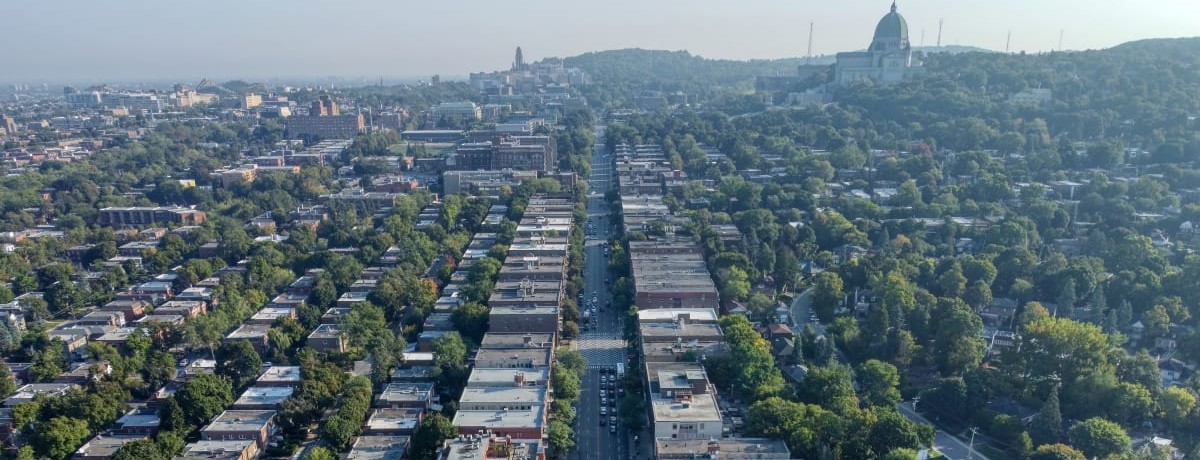
Buying your first home is one of the most exciting financial milestones you'll ever reach. It's also one of the biggest decisions you'll make. Between saving for a down payment, understanding mortgage options, choosing the right neighbourhood, and navigating Quebec's real estate process, it's easy to feel overwhelmed.
The good news is that buying your first home in Montreal doesn't have to be complicated when you understand the process and prepare properly.
This guide walks you through every major step of buying your first property in Montreal, from determining your budget to receiving the keys on closing day. Whether you're looking for a downtown condominium, a family home in the West Island, or a duplex as your first investment, this roadmap will help you make informed decisions and avoid common mistakes.
Rather than focusing only on the transaction itself, this guide also explains how to prepare financially, what government programs may be available, and how to build the right team to make your purchase as smooth as possible.
Why Buying Your First Home in Montreal Is Different
Every real estate market has its own characteristics, and Montreal is no exception.
Compared to many other major Canadian cities, Montreal continues to offer relatively affordable housing options while providing a diverse selection of neighbourhoods and property types. Buyers can choose from downtown condominiums, historic triplexes, suburban single-family homes, and everything in between.
At the same time, purchasing real estate in Quebec involves legal procedures and costs that may differ from those in other provinces.
For example:
- Real estate transactions in Quebec are finalized through a notary rather than a lawyer.
- Buyers must budget for the Quebec Land Transfer Tax, commonly known as the "Welcome Tax."
- Mortgage qualification rules are governed federally and may change over time.
- Some first-time buyers may qualify for federal or provincial programs that can make homeownership more accessible.
Understanding these differences before you begin your search can help you avoid surprises later in the process.
Complete Guide to Buying Real Estate in Montreal
Step 1: Determine Your Budget
One of the biggest mistakes first-time buyers make is shopping for homes before understanding how much they can comfortably afford.
Your mortgage payment is only one part of the equation.
You should also account for:
- Property taxes
- School taxes
- Home insurance
- Condo fees, if applicable
- Heating and utility costs
- Maintenance and repairs
- Moving expenses
- Closing costs
Many financial experts recommend that your housing costs remain within a comfortable percentage of your monthly income, allowing room for savings, unexpected expenses, and future financial goals.
Just because a lender approves you for a certain amount doesn't necessarily mean you should spend the maximum available.
Buying below your maximum budget often provides greater financial flexibility and reduces stress if interest rates or personal circumstances change.
Consider Your Lifestyle
Budgeting is about more than qualifying for a mortgage.
Ask yourself:
- Will you need a second vehicle?
- Are you planning to start a family?
- Would you rather have a larger home farther from downtown or a smaller property closer to work?
- How important is walkability or access to public transit?
- Are you planning to stay in the property for five years or longer?
Your answers will influence both your budget and your neighbourhood selection.
Step 2: Save Your Down Payment
Your down payment is one of the most important parts of purchasing a home.
The minimum amount required depends on the purchase price and current Canadian mortgage regulations.
Generally speaking:
- Homes under the federally established threshold require a minimum percentage down payment.
- Higher-priced homes require additional down payment requirements based on the purchase price.
Because mortgage rules occasionally change, buyers should always verify current requirements before beginning their search.
Beyond meeting the minimum, a larger down payment can provide several advantages:
- Lower monthly mortgage payments.
- Reduced borrowing costs over the life of the mortgage.
- Greater equity from day one.
- Potentially avoiding mortgage loan insurance when applicable.
Many first-time buyers also use registered savings plans and government incentives to help build their down payment.
Programs such as the Home Buyers' Plan (HBP), which allows eligible buyers to withdraw funds from their RRSP under specific conditions, may help reduce the time needed to save.
Eligibility requirements and contribution limits can change, so it's important to review the most current program details before relying on any government incentive.
How Much Down Payment You Need in Quebec
Step 3: Get Pre-Approved Before You Start Looking
Obtaining a mortgage pre-approval is one of the smartest steps a first-time buyer can take.
A pre-approval gives you a clearer understanding of your purchasing power before you begin visiting properties.
It can also:
- Demonstrate to sellers that you're a serious buyer.
- Help you narrow your search to realistic price ranges.
- Identify potential financing issues early.
- Lock in an interest rate for a limited period, depending on your lender.
Keep in mind that a pre-approval is not a final mortgage approval.
The lender will still need to review the property itself before granting final financing.
Documents You May Need
Although requirements vary by lender, buyers are commonly asked to provide:
- Proof of employment
- Recent pay stubs
- Tax returns or Notices of Assessment
- Information about savings and investments
- Details regarding existing debts
- Government-issued identification
Having these documents ready can significantly speed up the buying process.
Step 4: Choose the Right Neighbourhood
One of the advantages of buying real estate in Montreal is the incredible variety of neighbourhoods available.
Each offers its own lifestyle, housing options, amenities, and price points.
Some buyers prioritize:
- Short commutes
- Excellent schools
- Public transit access
- Restaurants and nightlife
- Parks and green spaces
- Future redevelopment potential
- Quiet residential streets
Rather than asking, "What's the best neighbourhood in Montreal?" ask, "Which neighbourhood best fits my lifestyle?"
For example:
A young professional may enjoy the walkability and energy of Griffintown or downtown.
A growing family may prefer Pointe-Claire, Notre-Dame-de-Grâce, or Ahuntsic.
An investor might prioritize neighbourhoods with strong rental demand and long-term appreciation potential.
Visiting neighbourhoods at different times of the day can provide valuable insight into traffic, noise levels, parking availability, and the overall community atmosphere.
Don't forget to consider future plans as well.
A property that meets your needs today should ideally continue meeting your needs several years from now.
Best Neighborhoods in Montreal for Buyers
Step 5: Build the Right Buying Team
Purchasing your first home is much easier when you're surrounded by experienced professionals.
A strong buying team often includes:
A Real Estate Broker
An experienced Montreal real estate broker can help you:
- Understand market conditions.
- Identify suitable properties.
- Arrange private showings.
- Evaluate comparable sales.
- Negotiate effectively.
- Guide you through every step of the transaction.
Working with someone who understands local neighbourhoods and current market trends can save both time and money.
A Mortgage Professional
Whether you work directly with a bank or an independent mortgage broker, obtaining expert financing advice can help you secure the mortgage product that best suits your financial goals.
A Home Inspector
Even when a property appears to be in excellent condition, a professional inspection may identify issues that are not immediately visible.
Depending on the property, an inspection could reveal concerns related to:
- Roofing
- Foundation
- Plumbing
- Electrical systems
- Heating and cooling equipment
- Moisture or water infiltration
Understanding a property's condition before removing your inspection condition allows you to make a more informed decision.
A Notary
Unlike many other provinces, Quebec uses notaries to complete residential real estate transactions.
The notary is responsible for preparing legal documents, conducting title searches, ensuring funds are transferred correctly, and officially registering the transaction.
Selecting your notary early in the process can help avoid delays as your closing date approaches.
At this stage, you've built a solid financial foundation, assembled the right professionals, and identified the type of property and neighbourhood that best fit your goals.
The next steps involve searching for the right home, making a competitive offer, navigating inspections and financing, and successfully completing the purchase.
Those stages are where preparation truly pays off, and understanding the process can make the difference between a smooth transaction and a stressful experience.
Step 6: Start Your Home Search
Now comes the exciting part: searching for your first home.
While it's tempting to focus only on beautiful kitchens or updated bathrooms, it's important to evaluate every property objectively.
When viewing homes, consider:
- The overall condition of the property
- The age of major components such as the roof, windows, furnace, or heat pump
- The layout and whether it suits your long-term needs
- Storage space
- Natural light
- Parking
- Future renovation potential
- Nearby schools, parks, and public transit
Don't forget to look beyond the home itself. Spend time walking around the neighbourhood, visiting local businesses, and exploring the area during different times of the day.
If you're purchasing a condominium, review important documents such as the declaration of co-ownership, financial statements, reserve fund, recent meeting minutes, and any planned major repairs.
Montreal Condo Market Explained
Step 7: Making an Offer
Once you've found the right property, it's time to prepare an offer to purchase.
Your real estate broker will help determine an appropriate offer price by reviewing comparable recent sales, current market conditions, and the property's overall condition.
Your offer may also include conditions such as:
- Financing approval
- Home inspection
- Review of condominium documents
- Sale of your existing property, if applicable
The strength of your offer isn't based solely on price.
The closing date, flexibility, financing, and conditions can all influence a seller's decision.
Negotiation is a normal part of most real estate transactions.
Some offers are accepted immediately, while others may involve one or several counteroffers before an agreement is reached.
An experienced broker can help you understand your options throughout the negotiation process.
Step 8: Completing Your Conditions
Once your offer has been accepted, you'll enter the conditional period.
This is when you complete any conditions included in your offer before the purchase becomes firm.
Home Inspection
A professional home inspection provides a detailed evaluation of the property's condition.
The inspector may identify maintenance items, repairs, or larger concerns that should be addressed before proceeding.
No home is perfect.
The purpose of the inspection is to understand the property's condition so you can make an informed decision.
Mortgage Approval
Your lender will finalize your mortgage approval during this period.
Additional documentation may be requested before financing is confirmed.
Avoid making major financial changes before closing.
For example:
- Don't finance a new vehicle.
- Don't open new credit cards.
- Don't make unusually large purchases.
- Don't change jobs without first discussing it with your lender.
These decisions can affect your mortgage approval.
Insurance
You'll also need to arrange homeowner's insurance before closing.
Most lenders require proof of insurance before mortgage funds can be released.
Step 9: Closing Day
Closing day is when ownership officially transfers to you.
Before closing, your notary will:
- Prepare all legal documents.
- Confirm title registration.
- Receive mortgage funds.
- Collect the required closing costs.
- Register the deed.
Typical closing costs may include:
- Quebec Land Transfer Tax (Welcome Tax)
- Notary fees
- Property adjustments
- Home insurance
- Moving expenses
- Utility setup costs
What Taxes Do Montreal Home Buyers Pay?
Once everything has been signed and registered, you'll receive the keys to your first home.
Congratulations!
Common Mistakes First-Time Buyers Should Avoid
Even well-prepared buyers can make avoidable mistakes.
Some of the most common include:
Shopping Before Getting Pre-Approved
Without knowing your budget, you may fall in love with a home that's outside your price range.
Forgetting About Closing Costs
Many first-time buyers focus entirely on the down payment while overlooking taxes, legal fees, moving expenses, and other closing costs.
Buying Based on Emotion
It's easy to become emotionally attached to a property.
Always evaluate whether the home truly fits your long-term financial goals and lifestyle.
Skipping the Home Inspection
Waiving an inspection may increase risk, particularly for older homes.
A professional inspection can provide valuable peace of mind.
Ignoring Future Needs
Think beyond today.
Will the property still meet your needs if your family grows, you begin working from home, or your lifestyle changes?
Buying with the future in mind often leads to better long-term decisions.
Frequently Asked Questions
How much money do I need to buy my first home?
In addition to your down payment, you'll need to budget for closing costs, moving expenses, insurance, and other one-time costs.
Every buyer's situation is different, so careful financial planning is essential.
Is buying better than renting?
The answer depends on your financial situation, long-term plans, and lifestyle.
Homeownership allows you to build equity and benefit from potential appreciation, while renting offers greater flexibility.
Neither option is universally better.
The right choice depends on your individual circumstances.
How long does the buying process take?
Every transaction is different.
Some buyers purchase within a few weeks, while others may spend several months searching for the right property.
Once an offer is accepted, closing often occurs within 30 to 90 days, depending on the agreement.
Should I buy a condo or a house?
Each option has advantages.
Condominiums often require less maintenance and may be more affordable.
Single-family homes generally provide more privacy, outdoor space, and flexibility for future renovations.
Your lifestyle, budget, and long-term goals should guide your decision.
Do I really need a real estate broker?
While it's legally possible to purchase a home without representation, having an experienced broker can simplify the process, provide valuable market insight, assist with negotiations, and help you avoid costly mistakes.
For many first-time buyers, professional guidance provides confidence throughout the transaction.
Final Thoughts
Buying your first home in Montreal is about much more than finding the right property.
It's about preparing financially, understanding the process, choosing the right neighbourhood, building a trusted team, and making informed decisions every step of the way.
The more prepared you are before you begin your search, the smoother your buying experience is likely to be.
Remember that purchasing your first home isn't about finding a perfect property.
It's about finding the right property for your needs, your budget, and your future.
With careful planning, realistic expectations, and experienced guidance, homeownership can become one of the most rewarding investments you'll ever make.
If you're thinking about buying or selling real estate in Montreal or anywhere in Quebec, I'd be happy to help. Call me at 514-777-1535 or email Christopher@CCMRealty.ca to discuss your real estate goals.